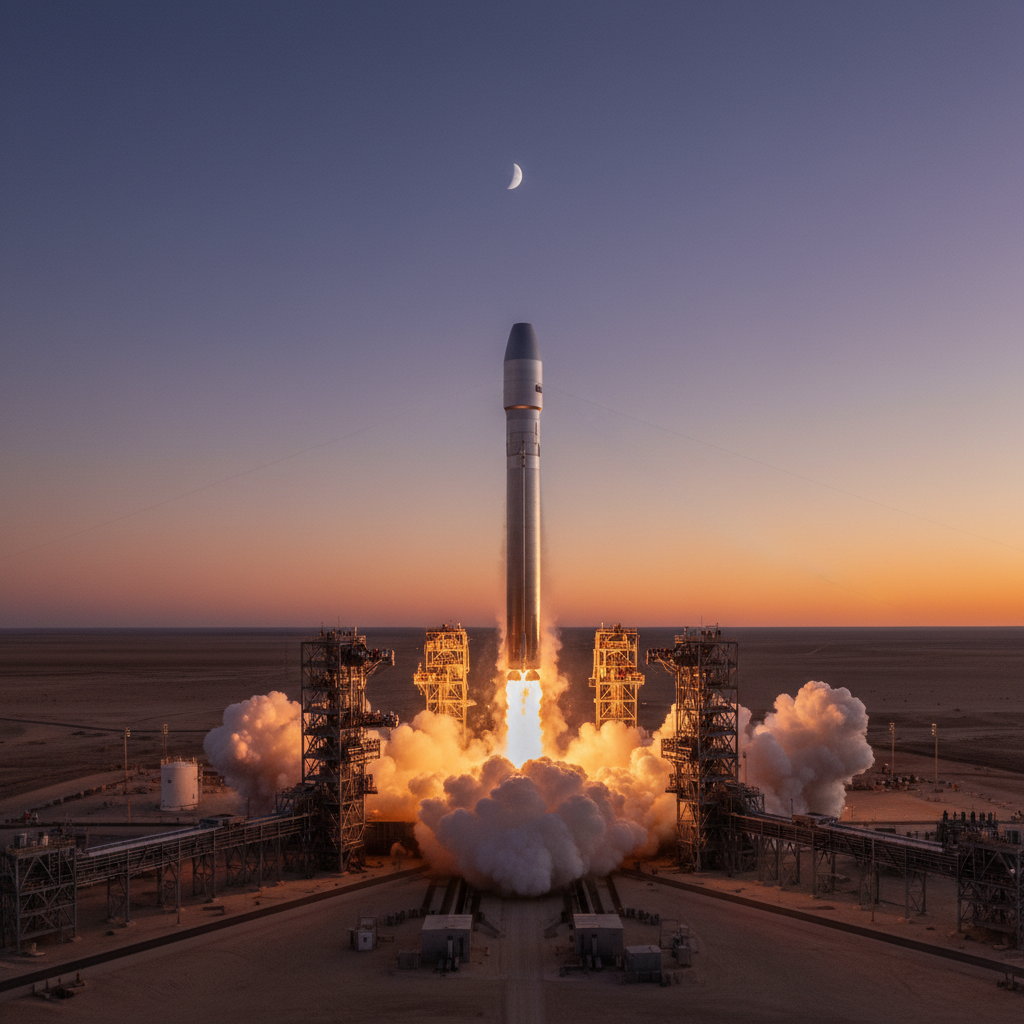
Artemis II Is Launching Soon And Here's Why The Moon Mission Is About To Be Peak Sci-Fi Energy
After more than half a century of watching humanity's lunar dreams fade into history books, we're about to experience something that feels genuinely borrowed from the golden age of science fiction. NASA's Artemis II mission represents far more than just another space launch, it's a tangible return to the Moon with a crew of real astronauts, marking a pivotal moment in our collective journey as an exploratory species. If you've ever wondered what it would feel like to witness humanity reclaim its place as a spacefaring civilization, the answer is coming much sooner than most people realize.
The Long Wait Is Finally Over
It's been 52 years since the last human set foot on the Moon. That's more than half a century of waiting, dreaming, and imagining what a return mission might look like. The Apollo 17 mission in 1972 left us with unforgettable images of moonwalks and lunar exploration, but also with a profound absence. For generations of children who grew up watching rockets in movies and reading sci-fi novels, the Moon became something of a distant myth, a place humans had visited once but seemed to have abandoned.
Artemis II changes that trajectory in a meaningful way. This mission serves as the crewed flight test for NASA's new Space Launch System (SLS) and the Orion spacecraft, essentially putting real astronauts on board to test systems that will eventually land humans on the Moon again. The crew will travel to the Moon, orbit around it, and return safely to Earth, paving the way for subsequent Artemis missions that will include actual lunar landings. It's the critical stepping stone between dreaming and doing.
What Makes Artemis II Feel Like Genuine Science Fiction
There's something particularly magical about Artemis II that taps into our deepest sci-fi sensibilities. The Space Launch System itself stands 322 feet tall, making it the most powerful rocket ever built by NASA. When it launches, it will produce 8.8 million pounds of thrust, creating a spectacle that hasn't been witnessed in decades. For anyone who's grown up consuming science fiction stories, actually seeing humanity build something this magnificent and purposeful in the real world feels like watching fiction become tangible reality.
Related: Best Password Manager 2026: Which One Actually Protects Your Passwords
The crew composition adds another layer of modern-era wonder. Artemis II will carry four astronauts, including the first woman and the first person of color to participate in a lunar mission. This representation matters deeply, not just symbolically but practically. It reflects how space exploration has evolved to become more inclusive, bringing diverse perspectives and expertise to the ultimate frontier. The crew includes Commander Reid Wiseman, Pilot Victor Glover, Mission Specialist Christina Koch, and European Space Agency astronaut Matthias Maurer. These aren't characters in a novel, they're real people about to do something extraordinary.
The technology powering this mission would astound sci-fi writers from previous generations. The Orion spacecraft incorporates advanced life support systems, radiation shielding, and autonomous navigation capabilities that represent decades of engineering innovation. It's equipped to protect astronauts during the journey through the Van Allen belts, regions of intense radiation that surround Earth. This is the kind of problem-solving that separates real space exploration from fantasy, and it's being executed with meticulous precision.
The Cultural Moment We're About To Experience
There's a palpable shift happening in how people think about space exploration. After decades where space missions felt like events happening in the background of our lives, there's renewed excitement and genuine public engagement. Social media conversations about Artemis II reflect a hunger for wonder that many of us didn't realize we had. When SpaceX landed the Falcon 9 first stage booster back in 2015, it sparked a global moment of awe. Artemis II will likely create something similar but on an even grander scale, because it represents humanity boldly reaching for something we briefly touched and then walked away from.
This moment also arrives at a time when many people feel disconnected from grand collective endeavors. Space exploration offers something our current moment desperately needs: a shared goal that transcends partisan divides, national boundaries, and immediate concerns. When the Saturn V rockets launched in the 1960s, they united people across the world in genuine excitement about human potential. Artemis II has the opportunity to rekindle that feeling on a global stage, reminding us of what we can accomplish when we commit resources and expertise toward audacious goals.
Related: The Best Budget Wireless Earbuds for 2026: Premium Features Without the Price Tag
What Comes After the Launch
Artemis II isn't a destination, it's a chapter in a larger story. The mission will generate invaluable data about how the Orion spacecraft performs with a crew in the radiation-intense environment beyond Earth's protective magnetic field. Every detail, from how the spacecraft handles micro-meteorites to how the life support systems respond to prolonged spaceflight, will inform future missions. By 2025 or 2026, assuming everything proceeds as planned, Artemis III will attempt the actual lunar landing, putting boots back on the Moon for the first time in over fifty years.
Beyond that, the Artemis program envisions establishing a sustained human presence on and around the Moon. This isn't just about visiting anymore, it's about learning to live and work in lunar environments. It's about establishing the infrastructure and knowledge base that will eventually make Mars missions viable. When you zoom out and look at the full vision, Artemis II represents the actual beginning of a new era of human space exploration, not as a one-off achievement but as a foundation for something much larger.
Why You Should Care About This Moment
Whether you consider yourself a space enthusiast or not, Artemis II matters because it represents humanity at its most hopeful and ambitious. In a world often consumed by problems that feel immediate and overwhelming, watching humans achieve something this challenging reminds us of our capacity for wonder and accomplishment. The mission will broadcast images and updates that everyone can access, creating moments of genuine connection to something larger than ourselves.
"The Moon is calling us to return, and with Artemis, we're answering that call," NASA scientists have emphasized, and that sentiment captures something essential about what this moment represents for our species.
Artemis II is launching soon, and when it does, we'll get to experience something that feels wonderfully, authentically science fictional. We'll see humans strap into a spacecraft sitting atop an impossibly powerful rocket and journey to another world. We'll watch in real time as our species does what we've dreamed about since we first looked up at the Moon and wondered what it might be like to go there. That's the kind of peak sci-fi energy that reminds us why exploration matters, why dreams matter, and why reaching for the Moon is never truly about the destination alone.