
7 Hidden Phone Settings That Are Killing Your Battery Life (And How to Fix Them)
We've all been there: it's mid-afternoon, your phone is already at 20% battery, and you're nowhere near a charger. While we often blame heavy apps or screen brightness, the real culprits might be lurking in your phone's settings, quietly draining power in the background. Most people don't realize that certain features they've never even heard of could be the difference between making it through a full day and desperately searching for an outlet by dinner time.
The frustrating truth is that smartphone manufacturers pack phones with features designed to enhance functionality and convenience, but many of these features come at a serious battery cost. Even more troubling, some of these power-draining settings are turned on by default, meaning you're likely losing valuable battery life without even knowing it. The good news? Once you understand what's actually consuming your battery, fixing the problem is usually just a few taps away.
1. Location Services Running in the Background
Location services are genuinely useful for navigation, finding nearby restaurants, and sharing your location with friends. However, what many people don't realize is that location services can operate in multiple ways, and some methods are exponentially more battery-intensive than others. Your phone uses GPS, which is constantly triangulating your position by communicating with satellites, and this process requires significant power consumption.
The issue becomes more complex when you consider that dozens of apps on your phone likely have permission to access your location at all times. Social media apps, weather applications, fitness trackers, and even games might be constantly pinging your location in the background. Some apps access your location even when you're not actively using them, a behavior known as background location tracking.
Related: Best Password Manager 2026: Which One Actually Protects Your Passwords
How to fix it:
The solution involves auditing which apps actually need location access and adjusting their permissions. On iPhone, navigate to Settings > Privacy > Location Services. You'll see a list of every app that accesses your location, along with an indicator showing whether each app uses your location always, while using the app, or never. Change most apps to "While Using" rather than "Always." On Android, go to Settings > Location > App Permissions and review each app's location access level. For maximum battery savings, consider turning off location services entirely except when you actively need navigation or want to share your location. Many people are surprised to find that completely disabling location services when not needed can add two to three hours to their daily battery life.
2. Bluetooth Constantly Searching for Connections
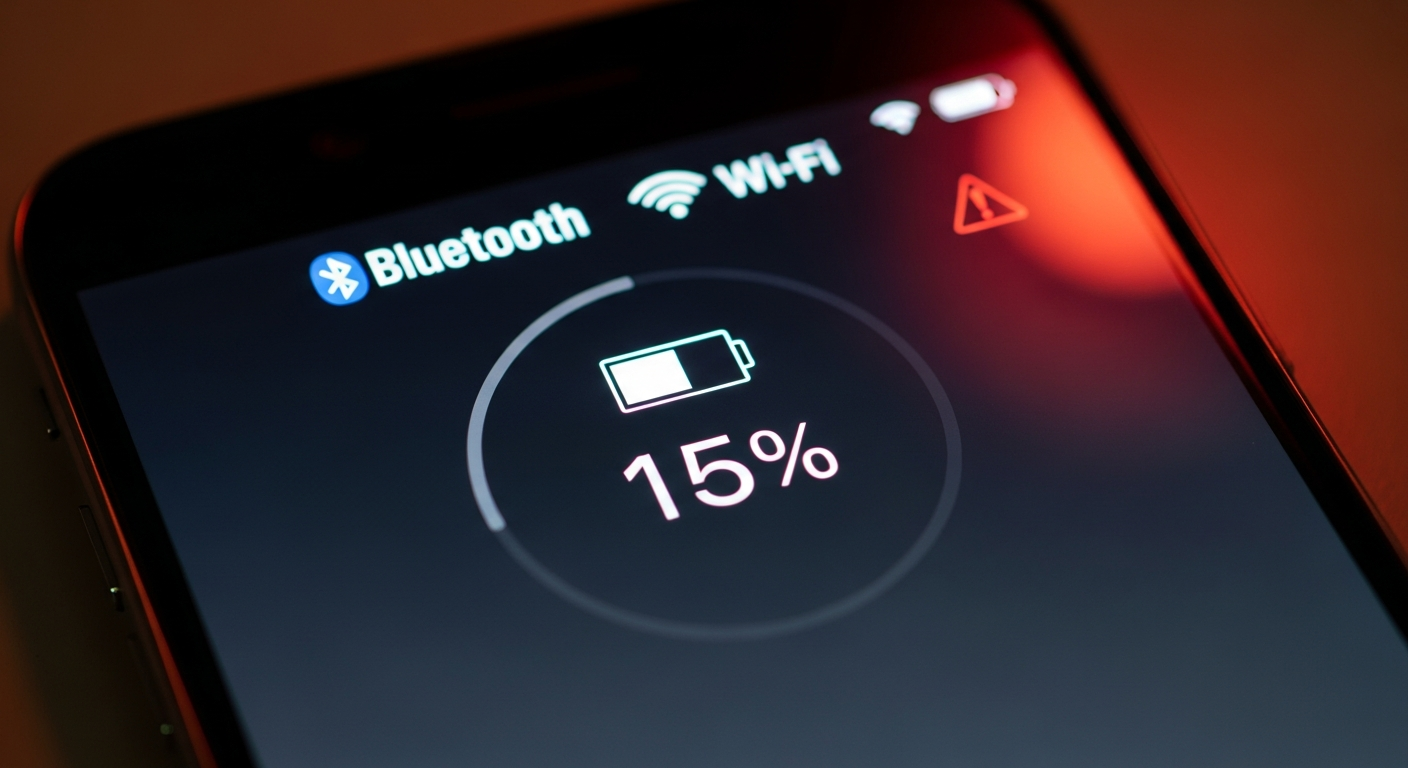
Bluetooth technology has revolutionized how we use our phones, enabling wireless earbuds, smartwatches, car connections, and fitness trackers. However, most people leave Bluetooth turned on constantly, even when they're not actually using any wireless devices. When Bluetooth is enabled, your phone continuously broadcasts its presence and searches for nearby devices, a process that consumes meaningful amounts of battery power.
What's particularly wasteful is keeping Bluetooth active in situations where you'll never use it. If you're in a meeting without your wireless earbuds, sitting at your desk without your smartwatch nearby, or taking a walk with just your phone, Bluetooth remains silently running in the background, depleting your battery for no practical benefit. This is one of the easiest wins for battery optimization because you can disable it in seconds and re-enable it only when needed.
How to fix it:
Simply disable Bluetooth from your control center when you're not actively using wireless accessories. On both iPhone and Android, you can swipe down from the top of your screen to access quick settings and toggle Bluetooth off. Make it a habit to check your quick settings panel throughout the day and turn Bluetooth back on only when you're about to use connected devices. Some research suggests this single change can improve battery life by five to ten percent depending on how often you were previously leaving Bluetooth active. It's a painless adjustment that requires just a second or two of effort.
Related: The Best Budget Wireless Earbuds for 2026: Premium Features Without the Price Tag
3. Wi-Fi Constantly Scanning for Networks
Similar to Bluetooth, Wi-Fi scanning is a feature many people don't realize is actively running on their phones. Even when you're not connected to any Wi-Fi network, your phone is continuously scanning for available networks in the background. This scanning process, called Wi-Fi discovery or Wi-Fi scanning, requires your phone's radio to be active and searching, consuming battery power constantly throughout the day.
The Wi-Fi scanning feature exists to improve your user experience by quickly connecting to available networks and providing location services through Wi-Fi positioning. However, the battery cost of this convenience is often higher than users realize, particularly if you move between multiple locations throughout the day. If you're primarily using mobile data or if you're in areas where Wi-Fi isn't frequently available, this background scanning might be unnecessary drain.
How to fix it:
You can't completely disable Wi-Fi scanning on most modern phones without disabling Wi-Fi entirely, but you can manage location-based Wi-Fi scanning features. On Android, go to Settings > Location > Location Services and look for "Improve Location Accuracy" or "Wi-Fi Scanning" options (the exact name varies by phone manufacturer). Disabling these options will prevent your phone from scanning for Wi-Fi networks specifically for location purposes. On iPhone, go to Settings > Privacy > Location Services and scroll down to find "System Services," then toggle off "Wi-Fi Networking." This prevents your phone from using Wi-Fi scanning for location services while still maintaining your ability to manually connect to Wi-Fi networks when you need them.
4. Automatic App Refresh and Background Activity
Most smartphones have a feature called background app refresh that allows applications to update their content even when you're not actively using them. This feature enables notifications to arrive instantly, social media apps to pre-load new posts, and news apps to fetch the latest headlines automatically. While this sounds convenient, it means your phone is essentially running multiple apps simultaneously in the background throughout the day.
The battery impact of background app refresh is often underestimated because the drain is distributed across dozens of apps rather than concentrated in one obvious culprit. News apps, social media platforms, email clients, and messaging services all request background refresh permissions, and if you grant them all, your phone is essentially working constantly to keep their content fresh. This is particularly problematic for apps you use infrequently or those that you might have forgotten about entirely.
How to fix it:
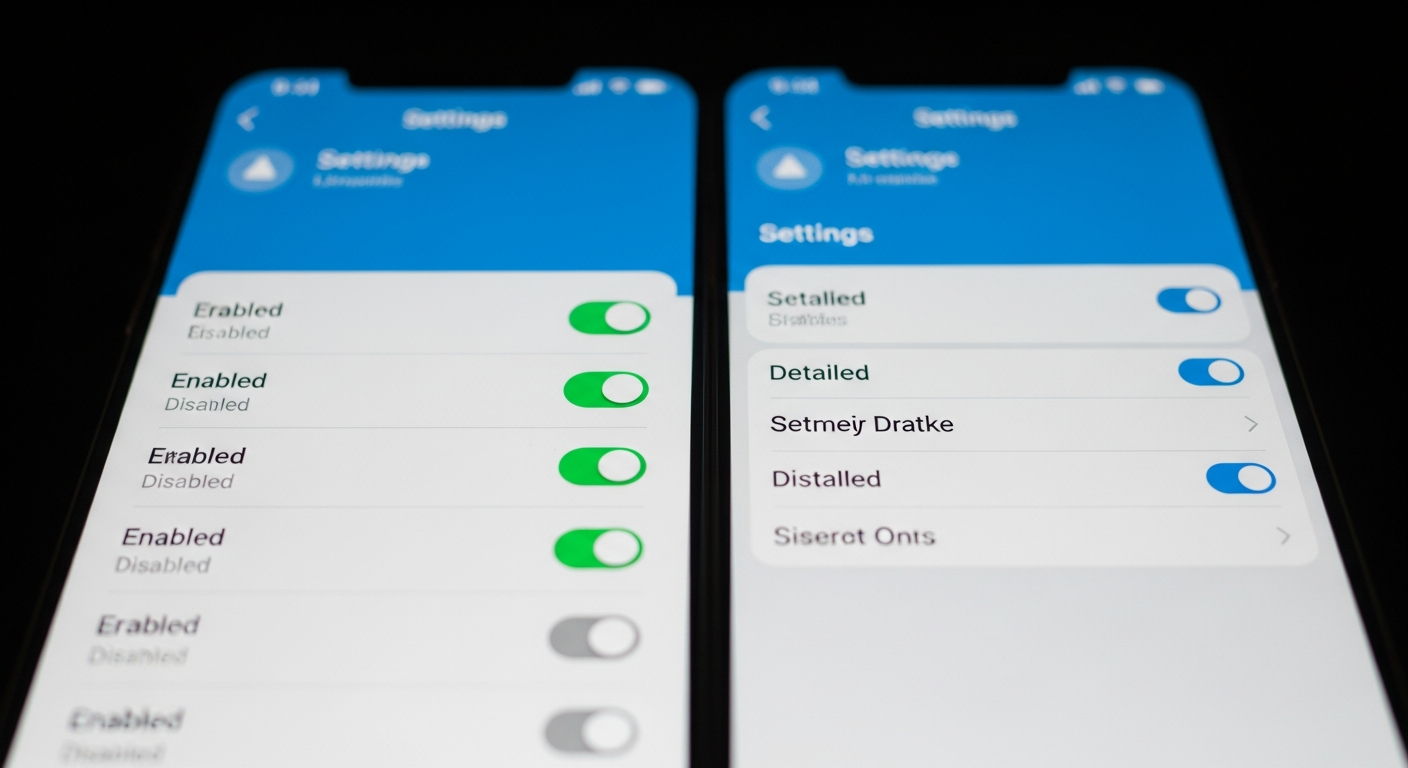
The key is selectively disabling background refresh for apps that don't genuinely need it. On iPhone, go to Settings > General > Background App Refresh and toggle off the feature entirely, or turn it off on a per-app basis by scrolling through the list. Keep it enabled only for apps that genuinely benefit from background updates, such as messaging apps, email, and weather applications. On Android, the process varies by manufacturer, but generally go to Settings > Apps > [App Name] and look for battery optimization settings or background restrictions. You can choose to restrict battery usage for specific apps. By limiting background app refresh to essential applications only, many users report battery improvements of one to two hours daily.
5. Dynamic Wallpapers and Live Lock Screens
Apple's live wallpapers and animated lock screens are visually appealing and can make your phone feel more personal and engaging. However, these dynamic visual features require your display to be constantly rendering and updating graphics even when you're not actively using your phone. Animated wallpapers keep your GPU and CPU engaged, preventing them from entering low-power states as effectively as static images do.
Similarly, some third-party apps offer dynamic lock screens and always-on displays with moving elements. While the battery drain from a single animated wallpaper might seem minimal, remember that your phone may display this wallpaper for hours each day, with the screen staying on or lighting up repeatedly throughout your device's idle time.
How to fix it:
Switch to a static wallpaper for maximum battery efficiency. On iPhone, go to Settings > Wallpaper > Choose a New Wallpaper and select a standard image rather than a live wallpaper. On Android, navigate to Settings > Display > Wallpaper and select a static image from your gallery. If you love visual customization, you can still use a beautiful static image that reflects your personality without the battery cost. The difference is subtle but noticeable, particularly for users who keep their phones on throughout the day. Some reports suggest switching from a live wallpaper to a static one can extend battery life by thirty minutes to an hour daily, depending on your usage patterns.
6. Excessive Display Brightness and Refresh Rates
Your phone's display is one of the biggest battery consumers, and how you use it dramatically affects overall battery life. Two display settings in particular drain power quickly: maximum brightness and high refresh rate options. Many newer smartphones offer 120Hz or 144Hz refresh rates, which create incredibly smooth scrolling and animations. However, this smoothness comes at a battery cost because your display refreshes the image twice as often, consuming proportionally more power.
Similarly, keeping your display at maximum brightness all the time means your backlight is working at full intensity throughout the day. While automatic brightness adjustment helps, many users override this by keeping brightness maxed out for perceived responsiveness or clarity. The paradox is that most users can comfortably use their phones at 30 to 50 percent brightness in typical indoor lighting conditions.
How to fix it:
First, ensure automatic brightness is enabled. On iPhone, go to Settings > Display & Brightness and toggle on "Auto-Brightness." On Android, go to Settings > Display > Brightness and ensure automatic brightness is active. Second, if your phone offers a high refresh rate option, consider lowering it. Most phones allow you to choose between 60Hz and 120Hz. Go to Settings > Display on your phone and select the lower refresh rate option. You might not notice the difference in everyday use, but your battery will appreciate the change. These two adjustments alone can add two to four hours to your daily battery life, making them among the most impactful changes you can make. The display will still be perfectly clear and responsive at these lower settings for virtually all real-world usage scenarios.
7. 5G Network Connectivity Always Enabled
5G networks offer faster data speeds, but they also consume significantly more power than 4G LTE. When your phone is connected to 5G, your modem is working harder and using more energy to maintain that connection. Even worse, many phones automatically switch between 5G and 4G based on signal strength, a process that itself consumes battery power. Additionally, 5G coverage is still spotty in many areas, so your phone might be searching for 5G connections even in locations where only 4G is available, wasting power in the search process.
The irony is that most daily smartphone tasks, from messaging and social media to email and video calls, don't require 5G speeds. You might not notice the difference between 5G and 4G when scrolling Instagram or checking email, but you'll definitely notice your battery dying faster. If you live or work in an area where 5G coverage is limited, disabling it becomes an even more important optimization step.
How to fix it:
On iPhone, go to Settings > Cellular > Cellular Data Options > Voice & Data and select "LTE" instead of "5G Auto" or "5G On." On Android, go to Settings > Network & Internet > SIMs and toggle off 5G, or find 5G settings in your carrier or modem settings. If you absolutely need 5G speeds occasionally, you can enable it when necessary and disable it otherwise. Many users find that staying on 4G LTE provides a noticeable battery improvement while maintaining sufficient speed for everyday use. Depending on how often you were connected to 5G and how strong those signals were, disabling 5G can extend your battery life by one to three hours daily.
The Real Impact of These Changes
Fixing all seven of these hidden settings won't transform your phone into a week-long battery machine, but cumulatively, they can add five to eight hours to your daily battery life. More importantly, you'll stop wondering why your battery drains so quickly and gain control over your device's power consumption. Many of these features were enabled by default by manufacturers because they enhance user experience, not because you actually need them running all the time.
The key insight here is that battery optimization isn't about making dramatic sacrifices. You're not disabling core functionality or making your phone harder to use. Instead, you're eliminating unnecessary background processes and features that were silently working against you. After making these changes, you'll likely wonder how you ever tolerated such poor battery life before, and you'll have the satisfaction of knowing exactly which settings are responsible for your improved performance. Take time this week to audit these seven areas on your phone, and you'll immediately notice the difference.