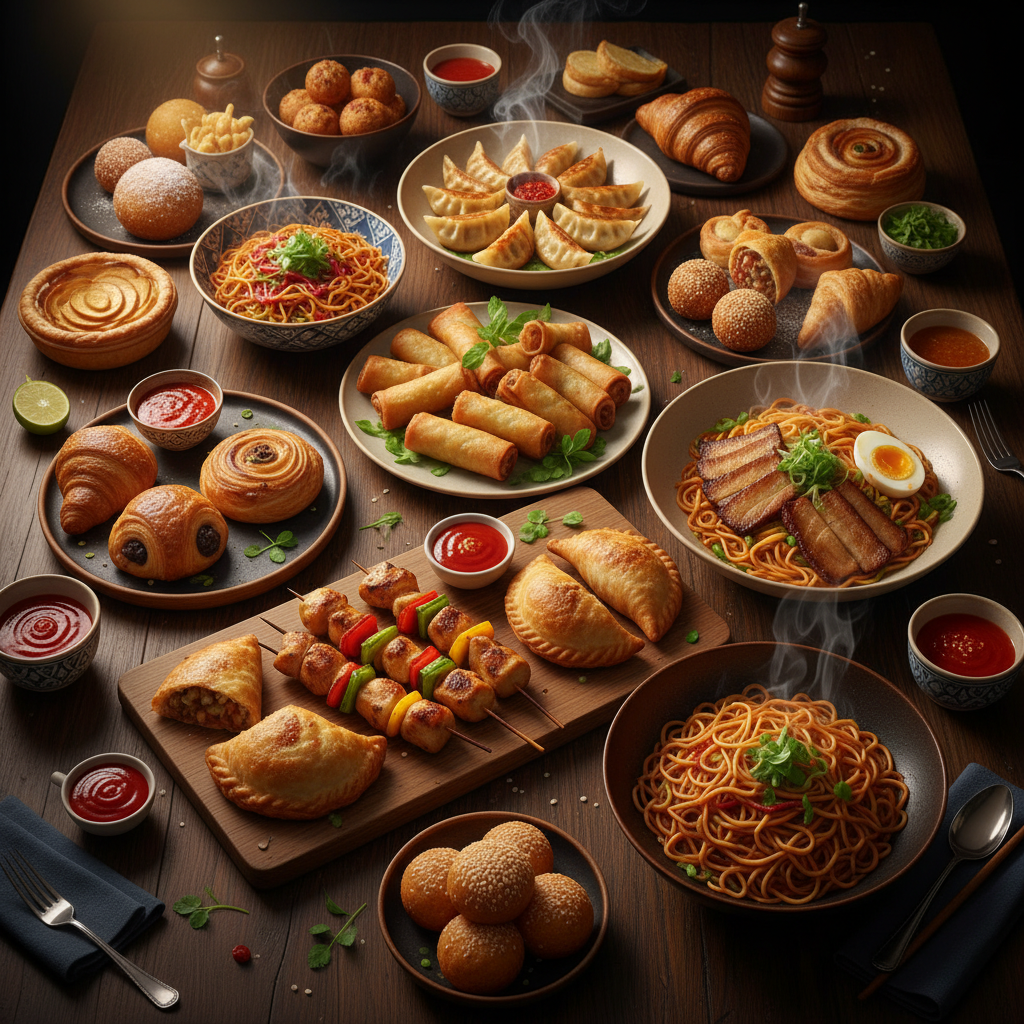
The global late-night snack market is expected to hit $143 billion by 2028, according to a recent analysis by Allied Market Research, as more people work flexible hours and embrace dining cultures beyond traditional meal times. There's something almost sacred about discovering what different cultures reach for when hunger strikes at 2 AM, because these aren't just convenient bites,they're windows into regional taste preferences, ingredient availability, and culinary creativity under minimal pressure. The best late-night snacks share a common trait: they satisfy cravings quickly without making you feel weighed down, whether that's a steaming bowl of late-night ramen in Tokyo or crispy plantain chips in Lagos. This list explores 11 snacks from around the world that have earned their reputation through sheer addictiveness and cultural significance.
1. Korean Tteokbokki (Spicy Rice Cakes)
Tteokbokki is the undisputed king of Korean late-night street food, and for good reason: this snack combines chewy cylindrical rice cakes with a gochujang-based sauce that's simultaneously sweet, spicy, and slightly savory. The dish became a cultural phenomenon in Seoul's convenience stores during the 1980s, and today it's served in dedicated tteokbokki shops that operate well past midnight. What makes this snack particularly brilliant for late hours is the textural contrast,the soft, almost gummy rice cakes against crispy fish cakes and eggs create interest without requiring heavy digestion. You'll find the most authentic versions at Korean GS25 or CU convenience stores, which sell individual packages for around 4,000-5,000 Korean won (roughly $3-4 USD). Many Seoul locals credit tteokbokki's perfect temperature, which hovers in the warm-but-not-piping range that won't disturb sleep, as part of its genius design for nighttime eating.
2. Mexican Elote (Street Corn)
Elote represents the Mexican philosophy that snacking should be a full sensory experience, not an afterthought. This street corn is grilled until the kernels develop deep char marks, then dressed with a mixture of Mexican crema, cotija cheese, chili powder (typically Tajin brand, which dominates the market), and fresh lime juice. The genius of elote as a late-night snack is its portability and the way it engages your mouth and hands,eating it slowly extends satisfaction without requiring you to consume massive quantities. According to a 2023 survey by the National Corn Growers Association, elote consumption in Mexico City increases by approximately 40% after 10 PM, particularly in neighborhoods like Coyoacan and Condesa where night markets flourish. Pro tip: authentic street vendors add the cheese and spices while the corn is still steaming, allowing the crema to melt slightly into the kernels rather than sitting as a topping.
3. Japanese Okonomiyaki (Savory Pancakes)
Okonomiyaki translates to "whatever you like, grilled," which perfectly captures the flexibility of this late-night staple found in izakayas and street stalls throughout Japan. The base is a batter made from wheat flour, eggs, and dashi broth, mixed with shredded cabbage and your choice of proteins,typically bacon, shrimp, or octopus,then cooked on a flat griddle until golden and slightly crispy on the edges. What distinguishes okonomiyaki from a simple pancake is its savory orientation and the drizzle of both okonomiyaki sauce (similar to Worcestershire but thicker and more complex) and Japanese mayonnaise applied in a crosshatch pattern. A study from the Japan National Tourism Organization found that okonomiyaki shops in Osaka report their highest foot traffic between 11 PM and 1 AM, suggesting the dish has become deeply embedded in Japanese nighttime culture. The best versions achieve what chefs call "kougari," the slightly charred, almost lacquered exterior that provides textural contrast to the tender interior.
Related: 15 Best Air Fryer Snacks That Cook in Minutes (No Oven Required)
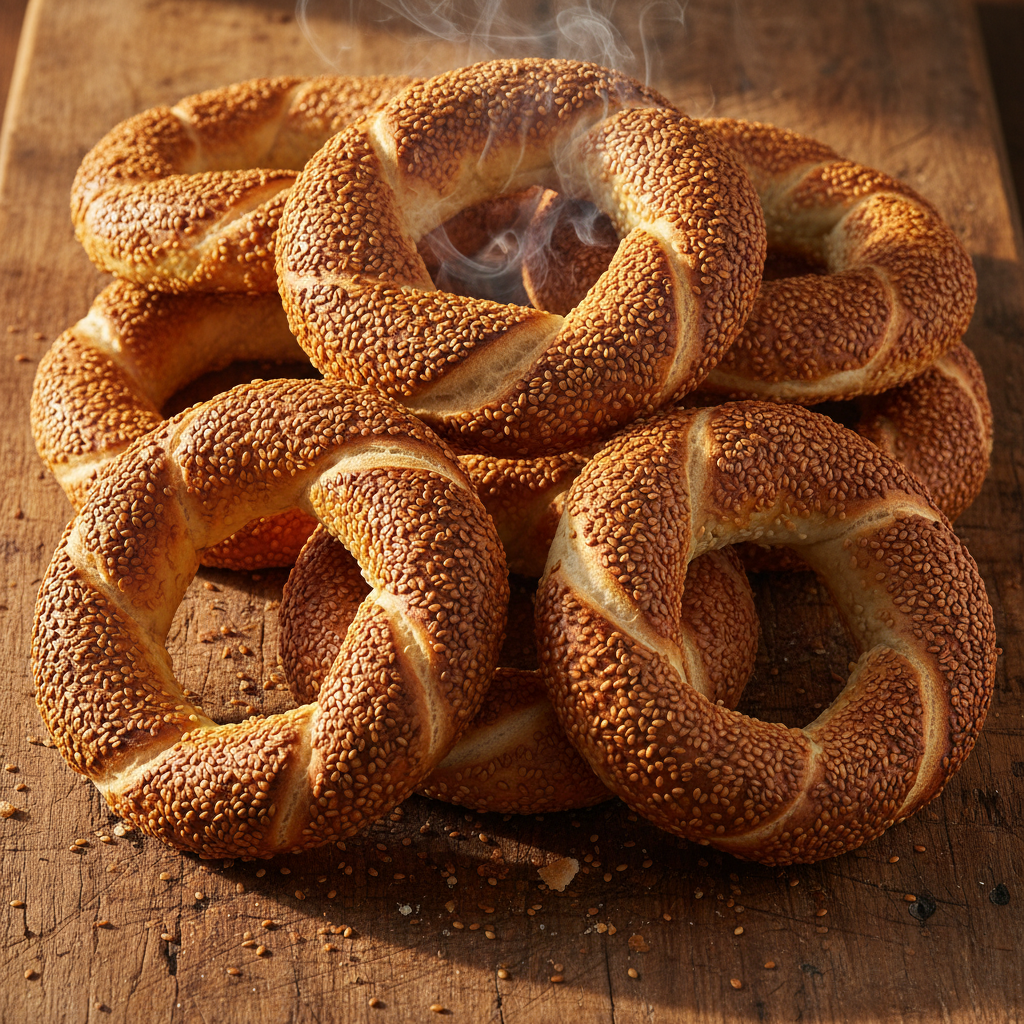
4. Turkish Simit (Sesame Seed Bread Ring)
Simit is technically a bread, but it functions as the Turkish version of a grab-and-go snack, particularly in Istanbul where vendors sell warm rings from street carts throughout the night. The dough is shaped into a large ring, dipped in molasses or grape molasses, then rolled in sesame seeds before baking until the outside develops a near-glass-like crunch. Unlike heavy breads, simit is surprisingly light because the dough contains minimal fat, making it an ideal choice for hunger that strikes at 3 AM without the guilt of a full meal. Turkish food writer Ebru Topuz has noted that simit's combination of texture and subtle sweetness from the molasses appeal to people seeking something "substantial but not burdensome," which explains why it persists in Turkish food culture despite modernization. You'll find the freshest simit at street vendors along the Golden Horn waterfront or near major transit hubs, where they're baked continuously and sold for 5-7 Turkish lira (roughly 20 cents USD).
5. Indian Samosa
The samosa occupies a unique position in the global snack pantheon as both a street food and a dish served at formal occasions, but its role as a late-night staple across India, Pakistan, and Bangladesh cannot be overstated. These triangular pastries encase a filling of spiced potatoes, peas, and sometimes meat, then are deep-fried until the exterior shatters between your teeth while the interior remains creamy. The traditional accompaniments,mint chutney and tamarind chutney,provide bright, acidic flavors that cut through the richness and prevent the snack from sitting heavily in your stomach. According to market research by Technavio, the samosa segment alone represents over $2.8 billion in the South Asian ready-to-eat snacks market, with evening and night-time consumption accounting for nearly 60% of sales. What most people don't realize is that the best samosas are consumed within 20 minutes of frying, when the pastry maintains its shatter factor,this is why vendor timing matters far more than the quality of the filling itself.
6. Brazilian Pastel
Pastels are the Brazilian answer to the question of what constitutes the perfect portable fried snack, and they dominate the late-night food scene in Rio de Janeiro, Salvador, and Sao Paulo. These crispy fried pastries encase various fillings: cheese and guava (the traditional pairing), ground beef, shrimp, or palmito, and are traditionally served with piranha sauce, a small bowl of spicy liquid for dipping. The construction is deceptively simple (wheat flour dough, filling, frying), yet the technique requires precision to achieve the characteristic shatter without the pastry absorbing excess oil. Food anthropologist Anna Carla Ferreira notes that pastels became ubiquitous in Brazilian nightlife during the economic boom of the 1990s, when new entertainment districts needed accessible street food to match late-night social culture. The best versions maintain an almost paper-thin wrapper, which you can assess by observing whether steam rises in a single column when first bitten (indicating proper frying) rather than emerging from multiple points along the surface.
7. Thai Pad Krapow Moo (Thai Basil Pork Stir-Fry)
Pad krapow moo is the Thai national snack for those moments when hunger transcends casual nibbling and demands something savory, aromatic, and slightly spicy without being overwhelming at midnight. Ground pork is stir-fried with Thai holy basil (krapow), garlic, bird's eye chilies, and soy sauce, then traditionally served over jasmine rice or with a crispy fried egg. What distinguishes this dish from mere cafeteria food is the basil, which releases its essential oils only through high-heat cooking and provides an anise-like floral note that makes the snack feel somehow more refined than its simple components suggest. According to the Bangkok Post, pad krapow moo is the most ordered dish at late-night "rot daeng" (red pickup truck) food stalls between 10 PM and 3 AM, suggesting the combination of familiarity and satisfaction triggers late-night cravings across all Bangkok demographics. The crucial technique is cooking at extremely high heat (wok temperature exceeding 400 degrees Fahrenheit) to prevent the basil from becoming bitter and the pork from becoming tough.
Related: 16 Café-Style Coffee Drinks You Can Actually Make at Home (No Espresso Machine Required)
8. Lebanese Manakish (Thyme and Oil Bread)
Manakish represents the Middle Eastern interpretation of what happens when you combine rustic bread dough with zatar (a blend of wild thyme, sumac, and sesame seeds) and olive oil. The dough is stretched thin, topped generously with the zatar mixture, and baked in a wood-fired oven until the bottom crisps slightly and the herbs begin to toast. Eaten alone or wrapped around fresh cheese and tomatoes, manakish delivers a combination of earthiness from the thyme, brightness from the sumac, and nuttiness from the sesame that prevents palate fatigue even after multiple bites. Lebanese food writer Kamal Mouzawak has documented that manakish consumption in Beirut's nightlife districts increases significantly after 11 PM, particularly on weekends, with demand often exceeding supply at popular bakeries like Promenade and Enab. The difference between adequate manakish and exceptional manakish comes down to oil quality,using premium extra-virgin oil from a specific Lebanese region creates a noticeable difference in mouthfeel and flavor complexity that casual consumers often overlook.
9. Spanish Churros con Chocolate (Fried Dough with Hot Chocolate)
The Spanish tradition of consuming churros con chocolate as a late-night snack dates back centuries, yet remains remarkably popular in Madrid, Barcelona, and beyond despite the proliferation of modern convenience foods. Churros are fried dough pastries, piped into long, ridged strands that crisp on the outside while remaining almost custardy within, served alongside a cup of thick, almost pudding-like hot chocolate for dunking. The chocolate served with churros differs dramatically from standard hot cocoa,Spanish chocolate contains less sugar, significantly more cocoa solids, and often includes a hint of cinnamon or vanilla, creating a rich, slightly bitter profile that balances the churros' sweetness. A 2022 study by the Spanish Tourism Board found that churro consumption peaks between midnight and 3 AM, particularly among late-night partygoers transitioning from nightclubs to early morning markets. The traditional accompaniment is neither alone sufficient for satisfaction,the interplay of crispy exterior, creamy interior, and thick chocolate creates a flavor and textural synergy that neither component achieves independently.
10. Nigerian Suya (Spiced Meat Skewers)
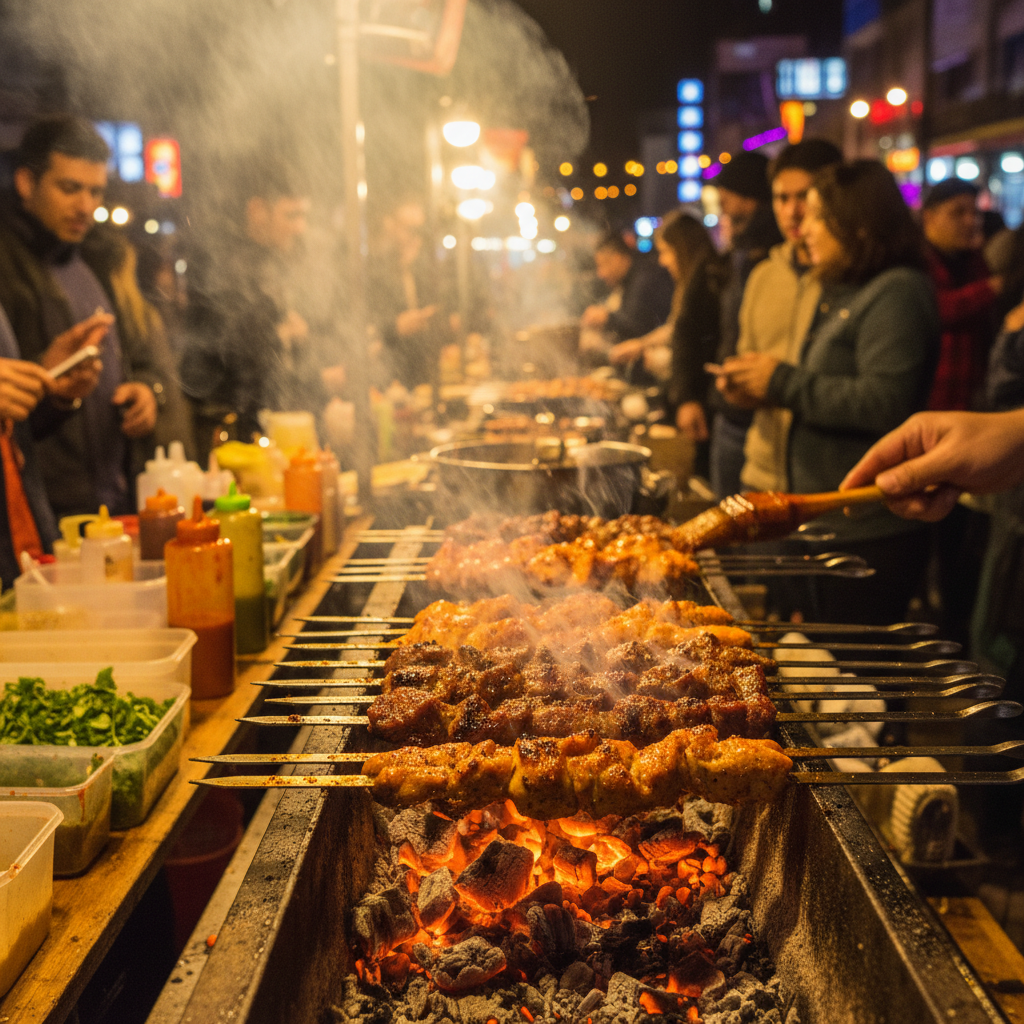
Suya represents the Nigerian and West African approach to late-night eating: protein-forward, heavily spiced, and designed for communal enjoyment under string lights and open air. Thin slices of beef or chicken are marinated in a spice mixture dominated by ground peanuts, cayenne pepper, ginger, and garlic, then grilled over charcoal until the exterior develops a papery char. The peanut-based spice coating provides both textural interest and subtle sweetness that prevents the snack from becoming merely hot for heat's sake. According to research from the Lagos Food Culture Institute, suya stands are busiest between 8 PM and 2 AM, with peak demand occurring on weekends in neighborhoods like Surulere and VI where nightlife concentrates. What distinguishes suya from similar grilled meat preparations in other cultures is the peanut component, which creates a sauce-like coating rather than a dry spice rub, and the tradition of serving with raw onions and tomato wedges, adding crispness and acidity that complement the char perfectly.
11. Vietnamese Banh Mi (Vietnamese Sandwich)
The banh mi occupies the final position on this list not out of lesser status but because it represents the ultimate fusion snack, blending French colonial influence with Vietnamese ingredients into something entirely unique. A crispy French-influenced baguette is filled with Vietnamese cold cuts (cha lua or pate), pickled daikon and carrot, fresh cilantro, and jalapeños, then dressed with a smear of maggi seasoning and sometimes mayonnaise. The architecture of banh mi is deliberately engineered: the carbohydrates from the bread satisfy; the umami from the pate and maggi creates savory depth; the acidic pickles cleanse the palate; and the fresh herbs and heat from jalapeños provide brightness that prevents monotony across bites. Food historian Andrea Nguyen notes that banh mi became particularly popular as a late-night snack during Vietnam's economic transition of the 1990s, when street vendors proliferated and the sandwich offered maximum nutrition for minimal cost. The most crucial element, often overlooked by casual consumers, is the bread quality,a proper banh mi baguette should feature a shattering crust with an open crumb structure, not a dense interior, which allows for proper moisture absorption from the fillings without becoming soggy.
Chasing Culinary Midnight Moments
These eleven snacks from across the globe share more in common than their late-night timing: each represents a culture's approach to satisfying hunger while maintaining balance between indulgence and restraint. Whether you find yourself in Seoul's convenience stores, Istanbul's streets, or your local Vietnamese sandwich shop at 2 AM, you're participating in a global conversation about what truly satisfies. The next time late-night hunger strikes, consider venturing beyond whatever's in your pantry,seek out one of these snacks and taste the genuine ingenuity that generations of cooks have poured into perfect late-night eating.