Know Your Airline's Size Limits Before You Pack
The first rule of carry-on packing is not getting blindsided at the gate. Most domestic carriers allow carry-on bags up to 22" x 14" x 9", but some international airlines have stricter size and weight limits, according to Ontario International Airport. If you're flying Spirit Airlines domestically, you've got a bit more room: they allow dimensions of 22 x 18 x 10 inches, per Travel Makes Me Happy.
Here's the thing: a 21-inch spinner carry-on bag is your safest bet because it complies with most carriers for both domestic and international flights, according to Travel Makes Me Happy. Beyond your main carry-on, most airlines allow one personal bag (generally no larger than 9" x 10" x 17") and one carry-on bag (generally 9" x 14" x 22"), per AAA Oregon. Know these numbers before you start throwing things into a suitcase.
The Strategy: Rolling, Folding, and Strategic Placement
Your packing method matters. Rolling clothes instead of folding saves space and minimizes wrinkles, and is especially effective for casual wear like T-shirts and jeans, according to AAA Club Alliance. But don't roll everything, there's nuance here.
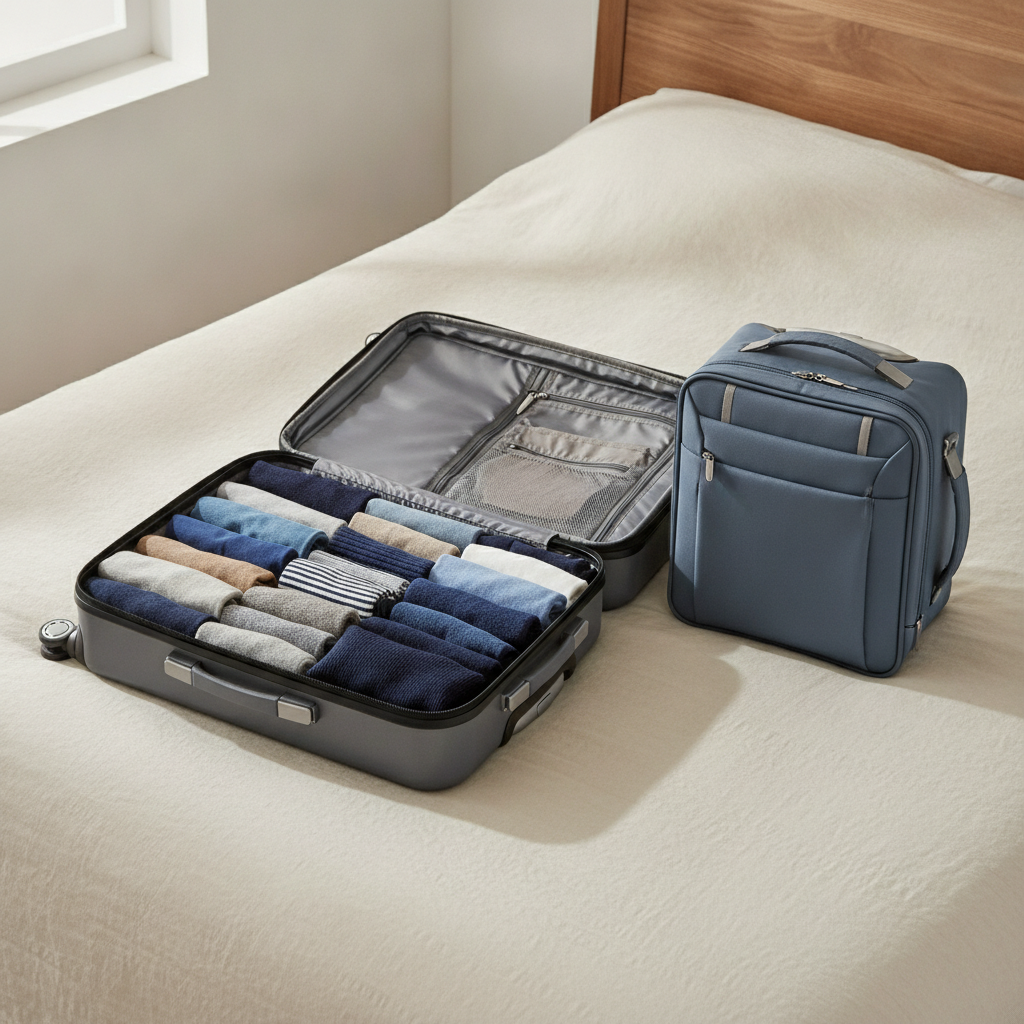
For a suitcase, the best approach is a mix of both, per Ontario International Airport: roll basics, fold formals, place heaviest items like shoes and your toiletry bag at the bottom, rolled clothes in the middle, and folded items on top. This creates a stable foundation and protects delicate pieces.
Related: 14 Best Travel Apps That Actually Make Trips Better (Not Just Prettier)
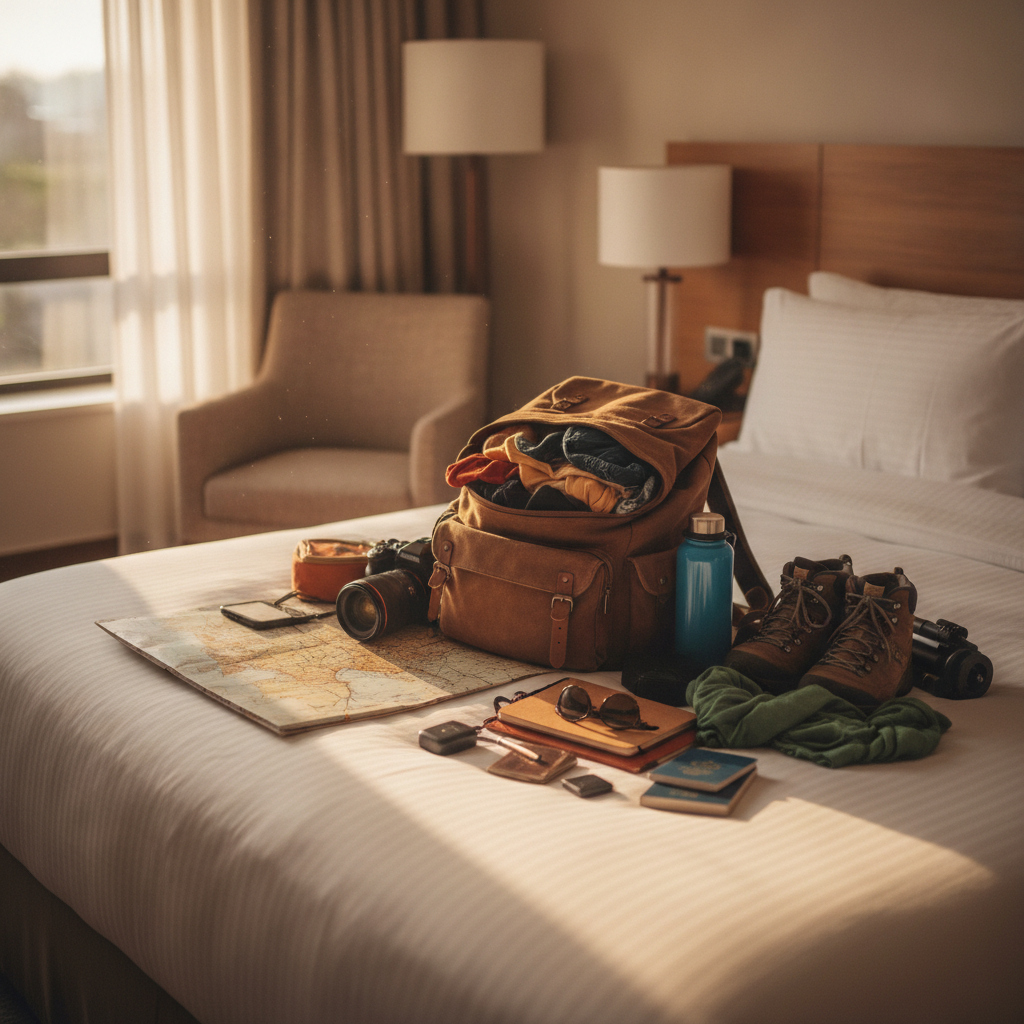
If you're traveling with a backpack instead, heavy items should go in the middle and closest to the back, with angled or pointed items kept away from the back, according to Ontario International Airport. And here's a clever trick: placing stacks of folded clothes on their sides (like books on a shelf) rather than face-up allows extra space for a toiletry kit and souvenirs, per Time Out Miami.
Compression and Organization Tools That Actually Work
Packing cubes help compartmentalize and compress belongings, keeping clothes neatly packed and making it easy to locate items without unpacking everything, according to AAA Club Alliance. They're not just trendy, they're functional for carry-on travel where space is precious.
Filling shoes with socks saves space and protects the shoe's shape when packing, per Away Travel. It sounds simple, but it eliminates wasted volume inside each shoe.
Smart Clothing Selection: The 2-5-1 Method
Overpacking clothes is the fastest way to exceed your carry-on limit. The 2-5-1 method, per The Everygirl, breaks down like this: two bottoms, five tops, and one outer layer. That's it. That formula is built for mixing and matching.
Related: How to Plan an Epic Weekend Trip for Under $500
Choosing versatile clothing that can be mixed and matched within a coordinating color palette maximizes outfit options while minimizing bulk, according to AAA Club Alliance. Think about your itinerary before you pack. Planning outfits by itinerary activity, like using a spreadsheet or whiteboard, helps with editing clothing down before packing a carry-on, per Jo-Lynne Shane. This step alone can cut your clothing volume in half.
Electronics, Valuables, and the Security Checkpoint
Your carry-on bag is where valuables live. Valuables, medications, electronics, and anything you'd hate to lose should go in your carry-on bag, according to Away Travel. This is non-negotiable. Check your bags at your peril; protect what matters.
Chargers, adapters, and electronic devices should be packed in a dedicated pouch to prevent tangling, and kept easily accessible for security screening, per AAA Club Alliance. You'll need quick access anyway, so organize them from the start.
Delicate items or electronics should be placed in the middle of a suitcase with softer clothing around them for cushioning, according to AAA Club Alliance. Your laptop, camera, or phone needs a buffer from the edges.
Toiletries and Liquids: Know the Rules
TSA rules exist for a reason, and they're not changing. Toiletries for carry-on travel must be in travel-size containers and kept in a clear, resealable bag for easy access during security checks, per AAA Club Alliance. No exceptions, no exceptions.
Here's the liberation: larger liquids and toiletries can always be purchased at the destination, so only essential travel-size items need to be packed, according to My Bella Vita. You don't need to bring your full-size shampoo. Grab a travel bottle or wait until you land. Your carry-on will thank you.
Your Personal Item: The Flight Companion
Don't forget your personal item, that backpack or purse you can slide under the seat. The personal item should hold everything needed during the flight, such as headphones, earplugs, and water, per BuzzFeed. Think about what you'll actually want access to at 30,000 feet.
Carry-On Packing Comparison: Luggage Type and Approach
| Luggage Type | Best Items to Pack | Layering Strategy | Key Consideration |
|---|---|---|---|
| 21-inch Spinner Suitcase | Basics, formals, shoes, toiletry bag | Heaviest at bottom, rolled in middle, folded on top | Complies with most airlines domestic and international |
| Backpack | Lighter, rolled items, electronics | Heavy items middle and closest to back | Keep angled or pointed items away from back |
| Personal Item (Purse/Small Backpack) | Electronics, headphones, earplugs, water, medications | Accessible, organized in pouches | For flight access and security checkpoint |
Carry-on-only travel isn't about deprivation, it's about strategy. Master these fundamentals, and you'll glide through the airport with the confidence of someone who actually has a plan. Plus, you'll never stand at baggage claim wondering if your suitcase made it. When you're ready to book that quick getaway, you'll already know exactly how much you can bring.