15 Desk Stretches You Can Do Without Leaving Your Chair: Perfect for Office Workers
If you spend most of your day sitting at a desk, your body is probably sending you some signals that it needs movement. Tight shoulders, stiff neck, lower back pain, and sluggish circulation are common complaints among office workers who remain sedentary for hours. The good news is that you don't need to leave your desk or change into workout clothes to combat these issues. These simple chair stretches take just a few minutes and can significantly improve your flexibility, reduce muscle tension, and boost your energy levels throughout the day.
Why Chair Stretches Matter for Desk Workers
Prolonged sitting compresses your spine, tightens your hip flexors, and weakens your core muscles. When you stretch at your desk, you counteract these negative effects by increasing blood flow, releasing endorphins, and improving your posture. Regular stretching breaks can help prevent chronic pain conditions and make you feel more focused and energized. The best part is that these stretches require zero equipment and barely interrupt your workflow.
The 15 Best Desk Stretches for Office Workers
-
Neck Rolls
Start by sitting upright and slowly rolling your head in a complete circle, moving your chin toward your chest first, then to your right shoulder, back, left shoulder, and back to center. Complete 5 to 8 rolls in each direction, moving slowly and breathing steadily throughout. This stretch releases tension in your neck and upper trapezius muscles, which often tighten from looking at computer screens.
-
Seated Spinal Twist
Sit upright in your chair and cross your right leg over your left knee. Place your left elbow on the outside of your right knee and gently twist your torso to the right while keeping your hips steady. Hold this stretch for 15 to 30 seconds, then repeat on the opposite side. This gentle twist mobilizes your spine and stretches your obliques while improving digestive function.
Related: 15 No-Equipment Workouts You Can Do in Your Apartment (No Gym Membership Required)
-
Shoulder Shrugs and Rolls
Raise your shoulders up toward your ears, hold for 2 seconds, then release them down with a relaxing exhale. After 10 repetitions, roll your shoulders backward in slow, controlled circles for 10 rounds, then reverse direction. This simple movement reduces muscle tension in your shoulders and neck while promoting better posture throughout your day.
-
Seated Cat and Cow
Sit upright with your hands behind your head or crossed over your chest. Arch your back slightly while lifting your chest and looking up toward the ceiling, then round your spine and tuck your chin toward your chest in the opposite motion. Alternate between these two positions 10 times, matching your breath to the movements. This dynamic stretch mobilizes your entire spine and alternates between extension and flexion.
-
Forward Fold From Your Chair
Sit with your feet flat on the floor and slowly roll your spine forward, starting from your head and moving vertebra by vertebra until your torso is folded over your thighs. Let your arms hang down naturally and breathe deeply for 20 to 30 seconds. This stretch lengthens your hamstrings, lower back, and entire posterior chain of your body.
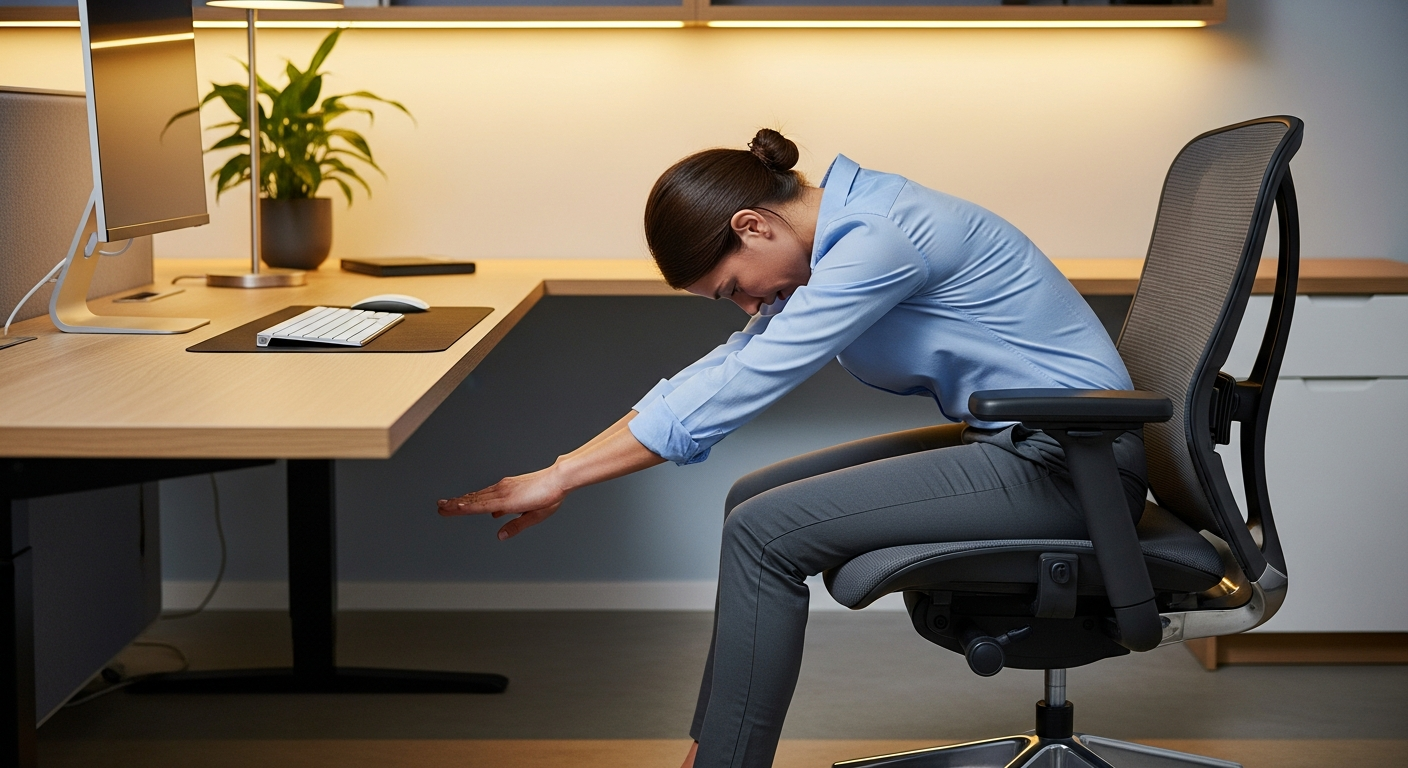
Image: GlobalFunReads -
Seated Figure Four Stretch
Cross your right ankle over your left knee so your right leg forms a "4" shape. Gently lean your torso forward while keeping your spine relatively straight until you feel a deep stretch in your right hip and glute. Hold for 20 to 30 seconds and repeat on the other side. This effective stretch targets your piriformis muscle, which can be a major source of hip and lower back pain.
Related: 13 Exercises for People Who Genuinely Hate Working Out (No Gym Required)
-
Chest Opener Stretch
Sit upright and clasp your hands together behind your back, then straighten your arms and gently lift them away from your body. Lift your chest and draw your shoulders back, holding this stretch for 15 to 20 seconds while taking deep breaths. This stretch counteracts the forward hunch that develops from leaning toward computer screens and opens up your chest and shoulders.
-
Seated Quadriceps Stretch
Sit upright and pull your right foot up toward your buttocks, holding it with your right hand while keeping your knee pointing downward. If needed, hold onto your desk with your other hand for balance. Hold for 20 to 30 seconds and switch legs. This stretch targets the quadriceps muscles on the front of your thighs, which are often tight from sitting all day.
-
Triceps Stretch Behind the Head
Raise your right arm overhead and bend your elbow, letting your right hand drop behind your head. Use your left hand to gently press your right elbow toward the center of your body, creating a stretch down the back of your arm. Hold for 15 to 20 seconds and repeat on the left side. This simple stretch targets your triceps and the back of your shoulders.
-
Wrist and Forearm Stretches
Extend your right arm straight in front of you with your palm facing down. Use your left hand to gently push the back of your right hand downward, then reverse and pull your fingers back toward your wrist. Hold each position for 10 to 15 seconds. These stretches combat repetitive strain from typing and mouse work by improving flexibility in your wrists and forearms.
-
Seated Hip Flexor Stretch
Sit upright and place your right foot flat on the floor while straightening your left leg behind you (or to the side if space is limited). Gently lean your torso forward to deepen the stretch along the front of your left hip. Hold for 20 to 30 seconds and switch sides. Since hip flexors tighten significantly from constant sitting, this stretch is especially valuable for office workers.
-
Lateral Neck Stretch
Sit upright and gently tilt your right ear toward your right shoulder, creating a stretch along the left side of your neck. For a deeper stretch, you can place your right hand on top of your head and apply gentle pressure. Hold for 15 to 20 seconds and repeat on the opposite side. This stretch releases tension that builds up from stress and forward posture.

Image: GlobalFunReads -
Seated Hamstring Stretch
Sit upright and extend your right leg straight in front of you with your heel on the ground and toes pointing upward. Hinge forward at your hips and reach toward your right foot, stopping when you feel an appropriate stretch. Hold for 20 to 30 seconds and switch legs. Tight hamstrings are extremely common in office workers and contribute to lower back pain.
-
Seated Glute Squeeze and Release
While sitting upright, squeeze your glute muscles as tightly as possible and hold the contraction for 2 to 3 seconds, then release completely. Repeat this 15 to 20 times. This isometric exercise activates your glute muscles, which can become weak and inactive from excessive sitting and contribute to lower back problems.
-
Upper Back and Shoulder Stretch
Cross your right arm across your chest at shoulder height and use your left arm to gently pull your right elbow closer to your body. Keep your shoulders relaxed and hold this position for 15 to 20 seconds, then repeat with your left arm. This stretch targets your shoulders and upper back, areas that hold significant tension for most office workers.
How to Get the Most From Your Chair Stretches
Timing and Frequency
The most effective approach is to take stretch breaks every 30 to 60 minutes throughout your workday. Even just 2 to 3 minutes of stretching can significantly impact how you feel and function. If you tend to forget, set a timer on your phone or use your calendar app to send you reminders.
Proper Form and Breathing
Move slowly and deliberately through each stretch, never bouncing or forcing yourself into deeper positions. Always breathe steadily and deeply, as holding your breath tightens your muscles and reduces the effectiveness of the stretch. You should feel a gentle pull in the targeted muscle group, but never sharp pain.
Consistency Creates Results
Like any fitness routine, consistency matters more than intensity. Stretching just a few times per week might provide temporary relief, but daily stretching leads to lasting improvements in flexibility, mobility, and pain reduction. The good news is that these stretches are so quick and convenient that you can easily make them a daily habit.
Final Thoughts
Office workers deserve to feel good in their bodies, and these simple chair stretches provide an accessible way to reduce pain, improve flexibility, and boost your overall well-being without leaving your desk. Whether you're dealing with chronic tension or simply want to prevent future problems, incorporating just a few of these stretches into your daily routine can make a noticeable difference. Start with the stretches that address your biggest trouble spots, and gradually work in more varieties as they become habit. Your body will thank you for the movement and attention you're giving it throughout your workday.