The Background TV Paradox: Why 67% of Remote Workers Need It But Can't Talk About It
A 2024 Pew Research Center study found that 67% of remote workers admit to having background noise or entertainment playing while they work, yet less than half of them feel comfortable mentioning it during video calls. This contradiction reveals something fascinating about modern work culture: we've all silently agreed that the silent home office is a myth, but we're still pretending to work in one. The question isn't whether you should have background TV while working from home. It's which show will actually boost your productivity instead of derailing it entirely into a Netflix rabbit hole at 10:47 AM on a Tuesday.
The stakes are higher than they seem. A 2023 study from the University of California, Irvine found that it takes an average of 23 minutes to regain focus after an interruption. Background TV operates in a strange middle ground: it can either serve as productive white noise that masks your home's distracting ambient sounds, or it can become the very interruption that costs you nearly half an hour of deep work. The difference between the right show and the wrong show is the difference between feeling engaged and productive versus feeling like you've wasted your afternoon watching someone rearrange their kitchen.
The Science of Background Content and Your Brain
Before diving into specific show recommendations, it helps to understand what's actually happening in your brain when background TV plays. Researchers from Nottingham Trent University conducted a study on music and productivity that extends to visual media: your brain can handle background stimuli that has predictable patterns and low narrative demand. This is why a cooking show with a rhythmic host voice works better than a thriller where plot twists demand your attention every 90 seconds.
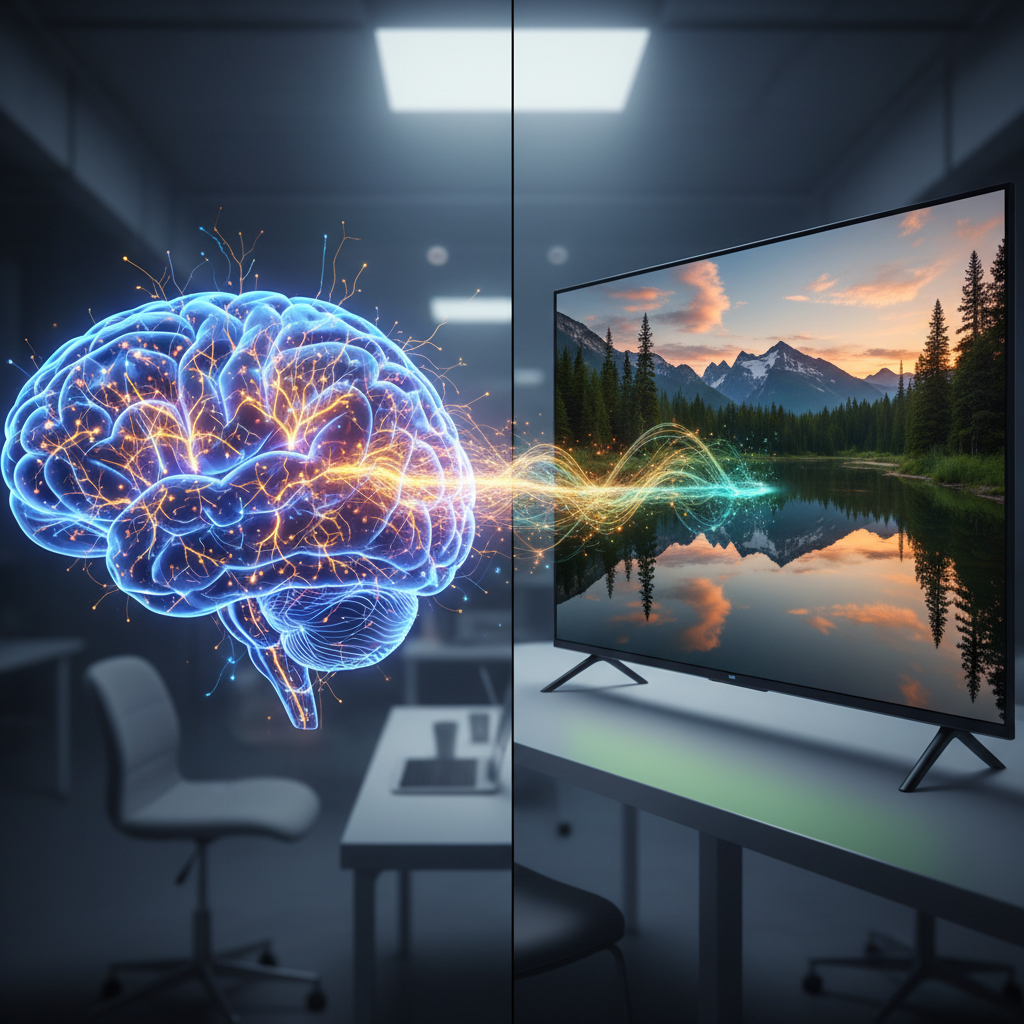
The key concept here is cognitive load. Your brain has a finite amount of attention bandwidth available during any given workday. When you're doing focused work like writing code, responding to emails, or designing presentations, you're using what psychologists call "directed attention." Background TV that requires minimal cognitive load (think someone slowly demonstrating how to make bread) leaves your directed attention intact while filling the void that silence or random household noise would otherwise occupy.
Related: 10 Best Movies Based on True Stories (And Where to Watch Them)
However, not all passive viewing is equal. Shows with laugh tracks, sudden audio spikes, or cliffhangers that make you look up from your screen will actually cost you productivity. The ideal background show creates what productivity researchers call "informational monotony": enough to occupy your auditory cortex and peripheral attention so your brain doesn't wander to your phone, but not so engaging that you're genuinely invested in what happens next.
"The problem isn't background stimulation itself, it's uncontrolled background stimulation. Your brain prefers predictable patterns to silence or random noise." - Dr. Daniel Kahneman's research on attention allocation has influenced how productivity experts think about background content in work environments.
The Tier System: How to Choose by Task Type
Not all work requires the same level of focus, which means not all background TV works for every task. A senior software engineer needs fundamentally different background content than a social media manager. Creating a tiered system helps you match the show to the work.
Tier 1: High Focus Work (Programming, Writing, Design)
If your job requires deep concentration and problem-solving, you need background content that essentially disappears into the background. Game shows from the 1970s and 1980s like "The Price Is Right" reruns work exceptionally well here because the format is so predictable that your brain stops registering it as novel information after about five minutes. The host's energy, the audience reactions, and the game structure follow such consistent patterns that you can work uninterrupted for two to three hours without your brain once asking "wait, what's happening on screen?"
Related: The Best Reality Competition Shows to Watch Right Now, From Survivor to Top Chef
Reality shows with cooking or baking competitions like "The Great British Bake Off" function similarly. After you've watched a few episodes, the format becomes so familiar that your brain treats it like an audio program with occasional visual updates. You might glance up when something goes wrong with a soufflé, but you won't lose 23 minutes of focus recovering from a plot twist.
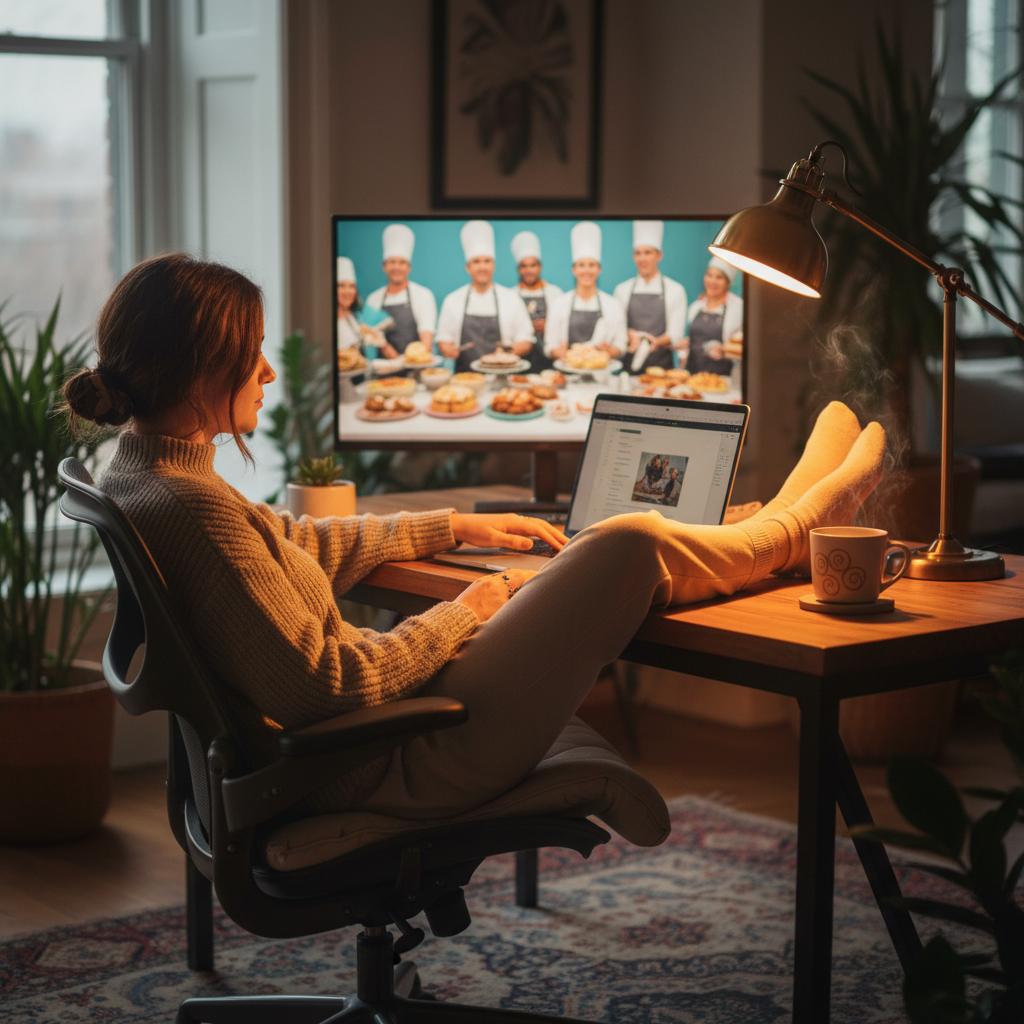
Avoid anything with narrative tension, cliffhangers, or surprise endings. Don't do true crime documentaries, drama series, or competitive reality shows where you genuinely don't know who will win. These are focus assassins dressed in productivity clothing.
Tier 2: Moderate Focus Work (Meetings, Email, Administrative Tasks)
When you're doing work that requires attention but not continuous deep thought, you have more flexibility. A 2022 survey by APA (American Psychological Association) found that office workers spend an average of 28% of their day in meetings. If you're joining video calls or spending time on administrative work, you can handle shows that are slightly more engaging than Tier 1 options.
Sitcom reruns become viable here. "The Office," "Parks and Recreation," or "Brooklyn Nine-Nine" work because while they have continuity and character development, each episode is designed to be watched while doing other things. Millions of people have watched these shows while scrolling their phones or working on laptops already. The format is so familiar that your brain doesn't demand your full attention.
Talk shows also work well for this tier, particularly long-form interview shows like "WTF with Marc Maron" episodes or standup specials. These are fundamentally designed to be consumed while doing something else, and they don't have visual information that changes rapidly enough to demand your gaze.
Tier 3: Light Focus Work (Data Entry, Repetitive Tasks, Social Media Management)
When you're doing work that's more muscle memory than mental energy, you can watch more engaging content without productivity penalties. This is where you can finally watch that new series everyone's been talking about, though you'll want to choose shows that don't require you to read subtitles unless reading is already part of your job.
Cooking competition shows, renovation programs, or travel documentaries work here. Your brain is active and engaged enough that you're not reaching for your phone out of boredom, but you're not so invested that you miss email notifications or Slack messages.
The Definitive Show Recommendations by Work Type
After analyzing the productivity research and considering what actually works in practice, here are the shows that consistently perform well as background content for remote workers.
For Writers and Developers: The Invisible Option
"The Price Is Right" might sound dated, but it's engineered for exactly what you need. The show has been on the air since 1956 with the same basic format, which means your brain stops processing it as new information almost immediately. The Drew Carey version (which runs from 1998 onwards) is available on Amazon Prime and uses essentially identical gameplay to the newer iterations. A full episode takes 30 minutes, so you can plan your morning knowing exactly how long a show will run.
Alternative options include "Jeopardy!" reruns (available on ABC.com or streaming platforms that license it), "Wheel of Fortune," or classic game show compilations. The psychology here is consistent: games with fixed rules, minimal narrative stakes, and predictable outcomes become white noise for your brain after about one episode of acclimation.
For Managers and Client-Facing Roles: The Familiar Comedy Option
"Parks and Recreation" has become something of a standard office background watch. The show is so widely consumed that your brain recognizes patterns and jokes before they land, which paradoxically makes it less engaging and therefore less distracting. Brooklyn Nine-Nine functions similarly. Both shows are available on Netflix and are designed in 20-minute episodes that don't demand your visual attention for plot developments.
If you want something slightly newer, "Schitt's Creek" works well because despite having continuity and character growth, individual episodes are self-contained enough that you won't miss critical plot points if you glance away for 15 minutes to type an email.
For Administrative and Repetitive Work: The Engagement Option
"The Great British Bake Off" has become a cultural phenomenon for a reason: it's engaging without being stressful. Unlike American cooking competition shows that emphasize yelling and drama, GBBO emphasizes technical skill and British politeness. This means you're interested in what's happening without experiencing anxiety about the outcome. The show is available on Netflix (new seasons) and various streaming platforms for older episodes.
"Nailed It" serves a similar function if you want something lighter and funnier. It's fundamentally about watching people attempt to make things they cannot make, which creates gentle entertainment without dramatic tension.
The Platforms and Practical Setup
Choosing a show is only half the challenge. Integrating it into your actual work setup requires some thought about logistics.
Screen Real Estate and Window Management
If you have a second monitor, this becomes simple: full-screen your work on one monitor and run your show on the other at reduced volume. If you're working on a laptop, position your streaming window on the side of your primary workspace. Apps like Magnet (Mac) or FancyZones (Windows) let you split your screen so your work takes 75% of the space and your show occupies 25%, just at the edge of your peripheral vision.
Never fullscreen a show on your primary work monitor. This creates a mental shift where the show becomes your main activity rather than your background activity. You'll lose productivity immediately.
Audio Setup and Volume Levels
The volume needs to be low enough that you can hear your own keyboard typing, Slack notifications, and any Zoom calls that come in unexpectedly. A good rule: if you can understand what's being said on screen without turning it up during a moment of silence, it's too loud. Your goal is audio that registers in your subconscious, not your conscious attention.
If you have a home office door, closing it makes a dramatic difference. The show becomes more of a presence when it's the only ambient sound, so you can run it at lower volumes and still feel its focusing benefit. If you're in a shared space, using closed-back headphones and running the audio there might actually be your best option, though this requires slightly different show selection (you need shows that don't require you to glance up as much).
The Shows to Absolutely Avoid
Just as important as knowing what works is knowing what will destroy your productivity masquerading as background content.
Never use true crime, documentaries with genuine mystery elements, or anything with a narrative arc you haven't seen before. "Making a Murderer," "The Dropout," or any limited series will hack your focus into pieces. The same applies to reality TV with real conflict: "Real Housewives," "Survivor," or dating shows where you're genuinely invested in outcomes.
Avoid anything with laugh tracks that surprise you or sudden volume spikes. Many older sitcoms use laugh tracks precisely when something unexpected happens, which trains your brain to look up at the moment something "surprising" (from the show's perspective) has occurred. This is actively counterproductive.
Don't use YouTube clips or TikTok feeds. The algorithm is specifically designed to make you click on the next video, which means it will consistently recommend more engaging content than whatever you started watching. You'll lose an hour without noticing.
Rotating Your Shows and Avoiding Adaptation
One subtle issue with background TV is that your brain adapts to the familiar. After watching the same show for three weeks, it stops being background noise and either becomes invisible (losing its focusing benefit) or becomes interesting again (defeating its purpose).
The solution is rotation. Pick three shows in the same tier, and rotate them weekly. This keeps your brain registering them as present without becoming so familiar that they disappear. A developer might rotate between "The Price Is Right," "Jeopardy," and "Wheel of Fortune," using one per week and cycling back.
Another approach is to reserve certain shows for certain days. Many remote workers find success assigning a different show to different days of the week, which provides just enough novelty to keep the focusing effect while maintaining the underlying structure that makes background TV productive.
The Forward-Looking Reality of Remote Work and Focus
The fact that 67% of remote workers use background entertainment suggests this isn't a productivity hack or a laziness indicator, it's a basic human need that traditional office environments suppressed through sheer social pressure. The irony is that open office plans spent decades being defended as "collaborative," when what they actually eliminated was silence and forced people to work under constant social observation.
Working from home revealed what many productivity researchers suspected: complete silence is actually harder to work in than we assumed. Your brain wants stimulation, and when it doesn't have intentional background input, it seeks stimulation from your phone, email, or random thoughts about your todo list.
The next evolution of remote work productivity isn't about eliminating distractions. It's about choosing which distractions serve your focus rather than sabotage it. Background TV, when selected thoughtfully, becomes a tool rather than a guilty pleasure. You're not slacking off by watching "The Price Is Right" while responding to emails; you're optimizing your brain's capacity for sustained work by addressing a basic need your brain was going to seek out anyway.