11 Games Like Wordle You'll Be Obsessed With for Free
When the New York Times acquired Wordle in January 2022, word game enthusiasts collectively held their breath, but the puzzle giant made good on its promise: the game remained free. Since that acquisition, Wordle's daily player base has grown to approximately 2 million people according to game analytics platforms, and that success has spawned an entire ecosystem of creative alternatives. Whether you've already conquered today's puzzle or you're hunting for something that scratches a different itch, these 11 games deliver the same addictive, once-per-day satisfaction (and in many cases, way more) without asking you to spend a dime.
1. Quordle: The Wordle Speedrunner's Nightmare
Quordle takes everything Wordle does and multiplies it by four. Instead of guessing a single five-letter word in six tries, you're simultaneously solving four Wordle puzzles at once, each with its own independent grid. The developer released Quordle in February 2022, and it quickly became the default choice for people who found standard Wordle too easy.
What makes Quordle genuinely different is how it forces you to balance strategy across four different word-solving paths. Your guess on grid one affects grid two, three, and four simultaneously, meaning a letter like "E" might help you in one puzzle while completely wasting a guess on another. The free version gives you unlimited daily attempts (unlike Wordle), which means you can actually experiment and learn from mistakes without waiting 24 hours. A Reddit survey from r/Wordle showed that players who switched to Quordle typically spent 8-12 minutes per session compared to 3-4 minutes on standard Wordle, suggesting the game is genuinely more cognitively demanding.
2. Semantle: When Letter Patterns Aren't Enough
Semantle completely reimagines Wordle's core mechanic by ditching letter positions entirely and instead focusing on semantic similarity. You're not guessing a five-letter word based on which letters are green, yellow, or gray. Instead, your guesses are evaluated based on how semantically similar they are to the target word, according to artificial intelligence trained on word embeddings.
Related: 10 Best Movies Based on True Stories (And Where to Watch Them)
This fundamentally changes how you approach puzzle-solving. You might guess "canine" when looking for "dog," and the game will indicate you're very close semantically even though you didn't use a single correct letter. The free version includes a new puzzle daily plus an archive of past puzzles if you want to binge-solve. Semantle's creator, David Turner, built the entire game using Google's Word2Vec model, which means the AI has genuine linguistic understanding rather than just pattern matching. Players report that Semantle usually takes 5-10 guesses compared to Wordle's average of 3-4, making it feel harder in a completely different way.
3. Spelling Bee: The Hidden Word Hunter
The New York Times Spelling Bee (yes, the same company that owns Wordle) is a deceptively complex word game that deserves far more attention than it gets. You're given seven letters arranged in a honeycomb pattern, with one letter highlighted in the center. Your job is to find as many words as possible using those seven letters, but every word must use the center letter at least once.
The strategic depth here comes from understanding letter combinations and word families that most casual word gamers never think about. A typical Spelling Bee might have anywhere from 20 to 100+ valid words depending on the letter set, and the game ranks you on how many you find ("Beginner" to "Genius"). What most guides won't tell you is that knowing obscure two-letter words like "QI," "XI," and "KA" can give you an enormous advantage, helping you find longer words faster. The Times publishes a new Spelling Bee daily, and it's completely free without paywalls or ads. Players typically spend 15-45 minutes hunting for words, making it much more time-intensive than a daily Wordle session.
4. Heardle: Wordle For Your Ears
Heardle swaps letters for sound clips, challenging you to identify a song from the shortest possible audio sample. You get six attempts to identify the correct song, with each incorrect guess revealing a slightly longer snippet of the track. It's Wordle's logic applied to music discovery.
Related: The Best Reality Competition Shows to Watch Right Now, From Survivor to Top Chef

The game was created by Spotify engineer Omkaar Gupte in 2022 before Spotify acquired it (though it remains free). Each daily puzzle is a carefully selected track from across Spotify's catalog, and the song choices skew toward recognizable but not necessarily obvious picks. Someone who listens exclusively to indie rock might breeze through an Arctic Monkeys song while struggling with a classic soul track, making Heardle feel more personalized than Wordle ever could. The game has been adapted into regional versions for different countries, each with different song catalogs. If you're someone who considers music discovery part of their daily routine, Heardle transforms your knowledge (or gaps in your knowledge) into an entertaining puzzle.
5. Waffle: The Crossword-Wordle Hybrid
Waffle presents a five-by-five grid of letters organized like a crossword puzzle, where you solve five interconnected five-letter words simultaneously. The grid is pre-populated with some letters already in place, and your job is to rearrange all the letters to make valid words both horizontally and vertically.
The elegance of Waffle lies in how it combines constraint satisfaction with word knowledge. Each letter position is locked into place, so solving the across clues directly impacts the down clues you're working on. The free version offers one puzzle daily plus unlimited "Waffle Unlimited" puzzles if you want more content. Having tried both Wordle and Waffle daily, Waffle actually feels more like solving a traditional crossword despite being structurally much simpler. The game was created by developer Robert Reichel and launched in March 2023, quickly accumulating over 50,000 daily players. Most people solve Waffle in 2-4 minutes once they understand the mechanic, making it perfect for a quick morning puzzle without derailing your schedule.
6. Poole: The Poolside Word Builder
Poole gives you a grid of letters and challenges you to form as many valid words as possible from adjacent letters (horizontally, vertically, or diagonally). Think of it as Spelling Bee but with grid positioning constraints and multiplayer competition built in.
What makes Poole genuinely engaging is the real-time multiplayer element. You're solving the same 3x3 grid as thousands of other players simultaneously, and you get ranked on how many unique words you found that others didn't. Finding an obscure five-letter word that three other players discovered might only score a few points, while a seven-letter word nobody else found could score huge. The game rotates new grids every few hours, which means you can play multiple rounds daily if you're invested. Poole is completely free and supported by optional cosmetic purchases that don't affect gameplay. The social discovery aspect (seeing what words other people found) often teaches you new vocabulary you wouldn't encounter in standard word games.
7. Dordle: The Fork in the Road
Dordle presents two Wordle boards side by side, and each of your guesses counts toward both puzzles simultaneously. You need to solve both five-letter words using the same six guesses, which requires significantly more strategic thinking than standard Wordle.
The psychological pressure of Dordle comes from managing two simultaneous solving paths. A letter that's yellow on one board but green on the other creates complex information management. Developer Zaratustra Z released Dordle in April 2022, and it became an instant hit with competitive Wordle players looking for a harder challenge. The average solve time for Dordle is around 7-8 minutes compared to Wordle's 3-4 minutes, but unlike Quordle's four-board variant, you're not managing four completely separate grids. This makes Dordle feel like a natural difficulty progression from standard Wordle rather than a completely different game. The free version includes daily puzzles plus a "Practice" mode where you can solve unlimited previous Dordles.
8. Framed: Movie Guessing From Single Pixels
Framed gives you a single pixel from a famous movie and challenges you to identify the film in six tries. Each incorrect guess reveals another pixel (or small expanded region), gradually giving you more visual information until the image becomes unmistakable.
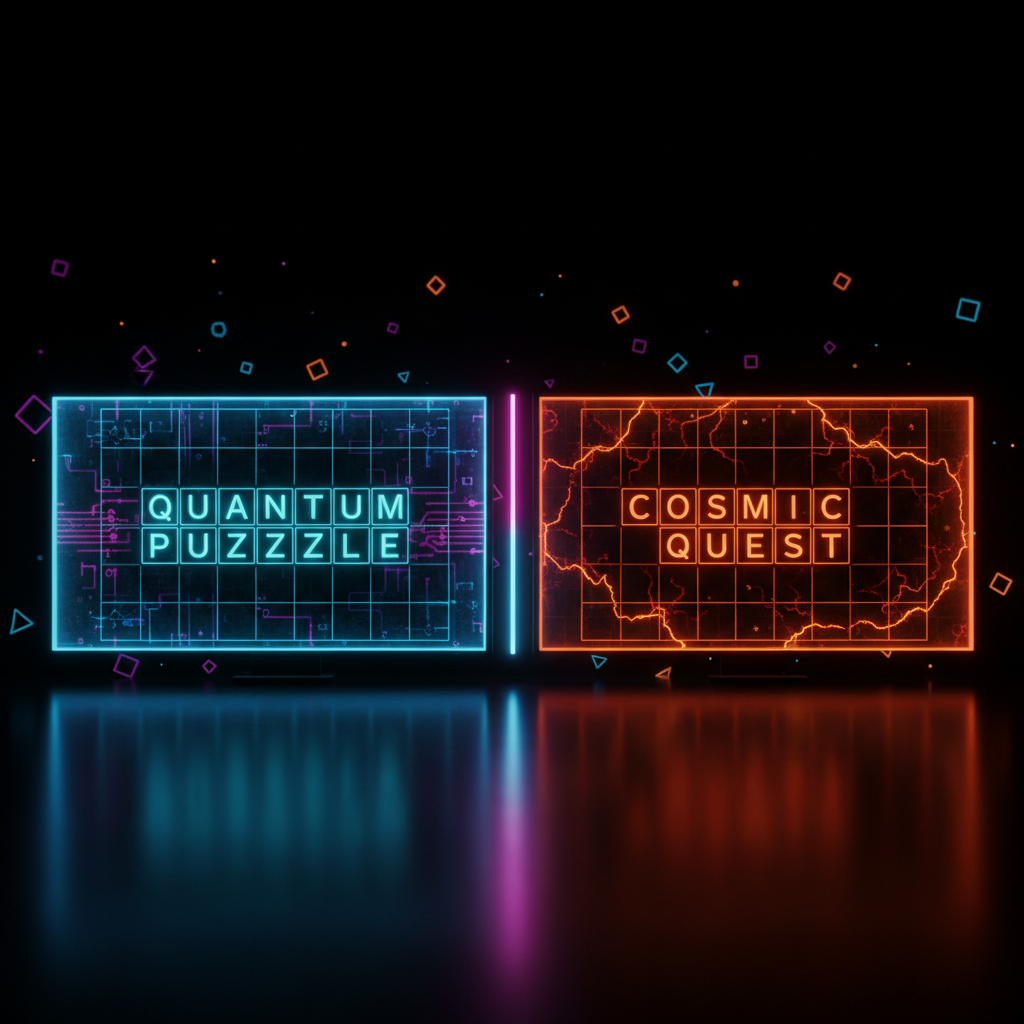
This game is pure movie trivia wrapped in a visual puzzle format. A film buff might recognize "Pulp Fiction" from three pixels based on John Travolta's suit color, while someone who hasn't seen the film might need five or six reveals. The developer releases a new puzzle daily, and the archive includes hundreds of famous and not-so-famous films ranging from 1920s cinema to recent blockbusters. Framed forces you to tap into visual memory in ways that traditional word games never require. Film critics have praised it as one of the few movie games that actually respects cinematic literacy rather than just testing whether you've heard of something. The free version is completely supported by optional premium memberships for features like streaks and statistics tracking.
9. Globle: Geography Gets Competitive
Globle presents you with an interactive globe and asks you to guess a country. Each incorrect guess shows you how far away your guess was from the target country with color-coded feedback (red for very far, yellow for closer, green for very close).
What makes Globle genuinely addictive is how it combines geography knowledge with strategic guessing. You might know that the target is in Europe, but narrowing down from 40+ European countries requires understanding borders, capital regions, and geographical relationships most people never actively think about. The game includes a world map heat map showing where you typically guess, which helps you identify geographical blind spots. A study from geography education researchers found that games like Globle actually improve spatial reasoning and geographic knowledge faster than traditional studying. The free version includes one daily puzzle plus unlimited practice puzzles. Globle often takes 8-12 minutes to solve if you're deliberate about your guesses, making it more time-intensive than Wordle but extremely engaging if you have any interest in geography.
10. Nerdle: For People Who Think in Numbers
Nerdle transposes Wordle's logic into pure mathematics. You're guessing a six-character mathematical equation in six tries, with feedback on which characters are correct and correctly positioned, incorrect but present, or completely absent.
This game is specifically designed for people who get bored with word games but enjoy analytical thinking. A typical Nerdle might have you figure out "12+34=46" or something more complex depending on the daily puzzle. The constraints are strict: each equation must follow proper mathematical order of operations and use only valid arithmetic. Nerdle creator Richard Mann released the game in January 2023, and it became an immediate hit among mathematics educators and engineers. Teachers have started using Nerdle in classrooms as a supplement to traditional math instruction, particularly for students who need more motivation to engage with arithmetic. The free version includes daily puzzles plus unlimited "Practice Mode" for solving previous Nerdles. If word games feel too easy, Nerdle offers a completely different cognitive challenge using the exact same format.
11. Murdle: Murder Mystery Meets Logic Puzzle
Murdle combines mystery narrative with grid-based logic deduction. You're given a murder scenario and a grid where you need to match suspects to weapons, locations, and motives using logical deduction and the clues provided.
The appeal of Murdle is that it feels like a crossword puzzle got into a serious conversation with a detective novel. Each puzzle has a narrative hook (a fictional character was murdered, and you need to deduce who did it and how), which provides context and entertainment alongside pure logic solving. Developer Grant Saunders released Murdle in 2022, and it quickly attracted people who loved traditional logic puzzles but wanted something with more personality. The game includes both free daily puzzles and a paid subscription for unlimited content, but the free daily puzzle is genuinely meaty, typically taking 20-30 minutes to solve properly. What most guides don't mention is that Murdle teaches formal deductive reasoning in a more natural way than traditional logic puzzle books. If you've ever enjoyed Sudoku-style puzzle grids but wished they told stories, Murdle is specifically made for you.
Your Daily Puzzle Routine Just Got a Lot More Interesting
The explosion of Wordle alternatives shows that people crave quick, satisfying cognitive challenges that don't demand hours of time investment. Whether you gravitate toward semantic thinking with Semantle, geographic knowledge with Globle, or multiplayer competition with Poole, there's a free game here that matches your specific interests and skills. Download one new game today and commit to its daily puzzle for a week. You'll probably find yourself checking back before you realize you've built another habit into your routine.